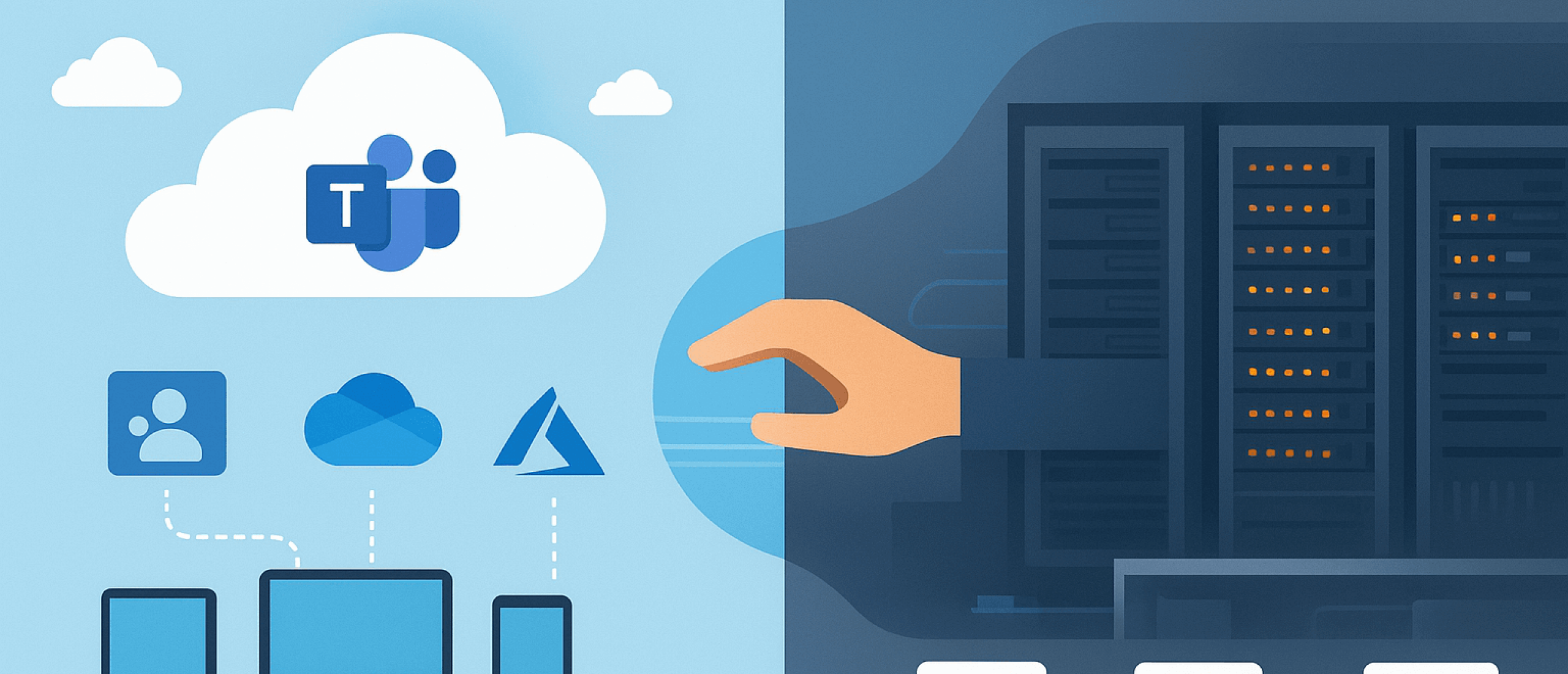

Cloud Migration: Prevent Unnecessary Costs with Hybrid IT and Smart License Management
More and more organizations are choosing to migrate to the cloud. The reason is often the same: companies want to work more flexibly, create scalable IT environments, increase productivity, and better respond to changing business needs. Cloud solutions make it easier to give remote employees secure access to systems, keep applications up to date, and centrally manage data. In addition, cloud environments often offer better security and disaster recovery options than traditional on-premise servers.
However, a cloud migration never happens entirely at once. The reality is that many companies still have applications, data, and processes that must continue running locally. These may include older software packages, internal systems that depend on local hardware, or processes that cannot be fully moved to the cloud due to compliance or regulatory requirements. As a result, a hybrid environment often emerges in which cloud and on-premise systems coexist. In this blog, you will learn more about cloud migration, license management, and which software can remain on-premise.
Why not everything moves to the cloud
The idea that all systems can move to the cloud at once sounds appealing but is rarely feasible in practice. There are various reasons why certain systems remain on-premise:
• applications that depend on specific hardware or internal networks
• software that does not yet have a cloud version or does not work well in the cloud
• production environments that do not have, or may not have constant internet connectivity
• systems that must remain local due to legal or compliance requirements
• temporary or test environments that are not yet ready for cloud hosting
It is therefore important to determine per system or application what can move to the cloud and what must remain on-premise. This makes migration manageable and prevents unnecessary investments in cloud licenses.
Many companies choose to keep sensitive data on-premise because it gives them full control over access, storage, and security. This helps them meet strict privacy and compliance requirements and limits the risk of data breaches or unauthorized access through external cloud environments.
Hybrid environments: a realistic intermediate step
For many organizations, a hybrid environment is often a necessary and long-term intermediate step in the journey to the cloud. It is rarely possible to migrate all systems at once. Cloud solutions and on-premise systems complement each other and must be carefully aligned to ensure continuity. It is crucial that on-premise systems continue running efficiently and that existing license investments are preserved. This prevents organizations from making unnecessary expenses or purchasing duplicate licenses.
Hybrid setups offer advantages in multiple situations. For example, a SQL database may temporarily remain on-premise because it is not yet suitable for Azure. File servers linked to internal production processes or RDS environments used by specific departments also often stay local longer. Additionally, there are applications that are not yet optimized for cloud versions or that are too complex to migrate, making temporary on-premise hosting the most practical solution.
Softtrader guides organizations in making these decisions. We advise which systems can safely and efficiently remain on-premise and which are better suited for migration to the cloud. We take continuity, cost savings, and optimal use of existing licenses into account. With this gradual approach, organizations can modernize at their own pace while keeping business processes running smoothly and avoiding unexpected expenses.
Saving costs during cloud migration
One of the biggest pitfalls in migration is purchasing cloud licenses too early. Many organizations buy Microsoft 365 subscriptions for all users immediately, even though part of the workforce still relies on on-premise environments. This leads to overlap and unnecessary costs.
Softtrader helps organizations save money by:
• Using pre-owned Microsoft licenses for on-premise servers
• Advising temporary solutions for hybrid environments
• Providing insight into optimal license management during migration
By using existing licenses wisely and optimizing hybrid environments, organizations can keep costs low while gradually building their cloud environment.

Cloud Migration with Softtrader
Cloud migration offers many benefits, but it rarely happens all at once. In most cases, cloud and on-premise systems continue to exist side by side. By determining which systems remain local and using existing licenses wisely, you can reduce costs and build a flexible IT environment.
Softtrader supports the on-premise stage of the migration. We advise which current Microsoft licenses are better kept on-premise. We help set up hybrid IT environments by supplying competitively priced Microsoft licenses.
With our support, your organization modernizes while saving costs. You maintain control over critical systems, increase efficiency, and maximize the benefits of the cloud. Request a quote if you are interested in our Pre-Owned licenses or contact our team for further questions.
FAQ
What is cloud migration?
Cloud migration is the process in which an organization moves data, applications, and IT systems from on-premise servers to cloud environments. The goal is flexibility, scalability, improved security, and more efficient management of business processes.
Why can’t everything move to the cloud at once?
Not all systems are immediately suitable for cloud hosting. Reasons to keep certain applications or data on-premise include:
• Dependence on specific hardware or internal networks
• Software that does not yet have a cloud version or does not function well in the cloud
• Production environments that may not have constant internet connectivity
• Legal or compliance-related reasons
• Temporary or test environments that are not yet ready for cloud hosting
Why do companies often keep sensitive data on-premise?
By storing sensitive data locally, organizations maintain full control over access and security. This helps meet strict privacy and compliance requirements and reduces the risk of data breaches through external cloud environments.
What is a hybrid IT environment?
A hybrid environment combines on-premise systems with cloud solutions. It is a realistic intermediate step because many systems cannot be moved to the cloud immediately. Hybrid setups ensure that business processes continue running while the cloud is gradually implemented.
Which systems often remain on-premise in a hybrid environment?
• SQL databases that are not yet suitable for Azure
• File servers connected to production processes
• RDS environments used by specific departments
• Applications that are not yet optimized for cloud versions
How can an organization save costs during cloud migration?
Cost savings can be achieved in several ways:
• Using existing Microsoft licenses for on-premise systems
• Smart planning of hybrid environments to avoid duplicate licenses
• Phased migration, meaning not all cloud licenses need to be purchased immediately
What are the benefits of a gradual migration to the cloud?
• Costs remain manageable and license overlap is avoided
• Business processes continue without interruption
• Organizations maintain control over sensitive systems
• The transition to the cloud is safe, flexible, and efficient
Do I need to upgrade all my Microsoft licenses immediately during a migration?
Not necessarily. Many organizations purchase new cloud licenses too early while part of the workforce still uses on-premise systems. Softtrader helps determine which licenses are best kept on-premise and which should move to the cloud.